Stop Selling Your Leads Wholesale.
Build Your Own Buyer Network.
Give buyers a place to buy leads, a guided setup flow, and delivery that fits their needs. Manage your sources, routing rules and buyers in one workspace.
No credit card to explore. Plan starts at checkout.


30+
AI Tools Live
3
Traffic types
600+
API Endpoints
1
Platform
Follow a lead from start to finish
Your campaign, contract rules and buyer delivery stay connected to the same lead record.
- 01 / Intake
A partner sends a lead
Campaign
Lead fields
Supplied consent evidence
The campaign connects the submission to an offer.
- 02 / Match
Your rules find a buyer
Targeting
Schedule and caps
Distribution strategy
The platform checks each matching contract against your routing rules.
- 03 / Deliver
The buyer receives it
Chosen destination
Delivery response
Recorded outcome
Your team can inspect what happened from the lead record.
See the buyer’s side
From questions to a clear next step
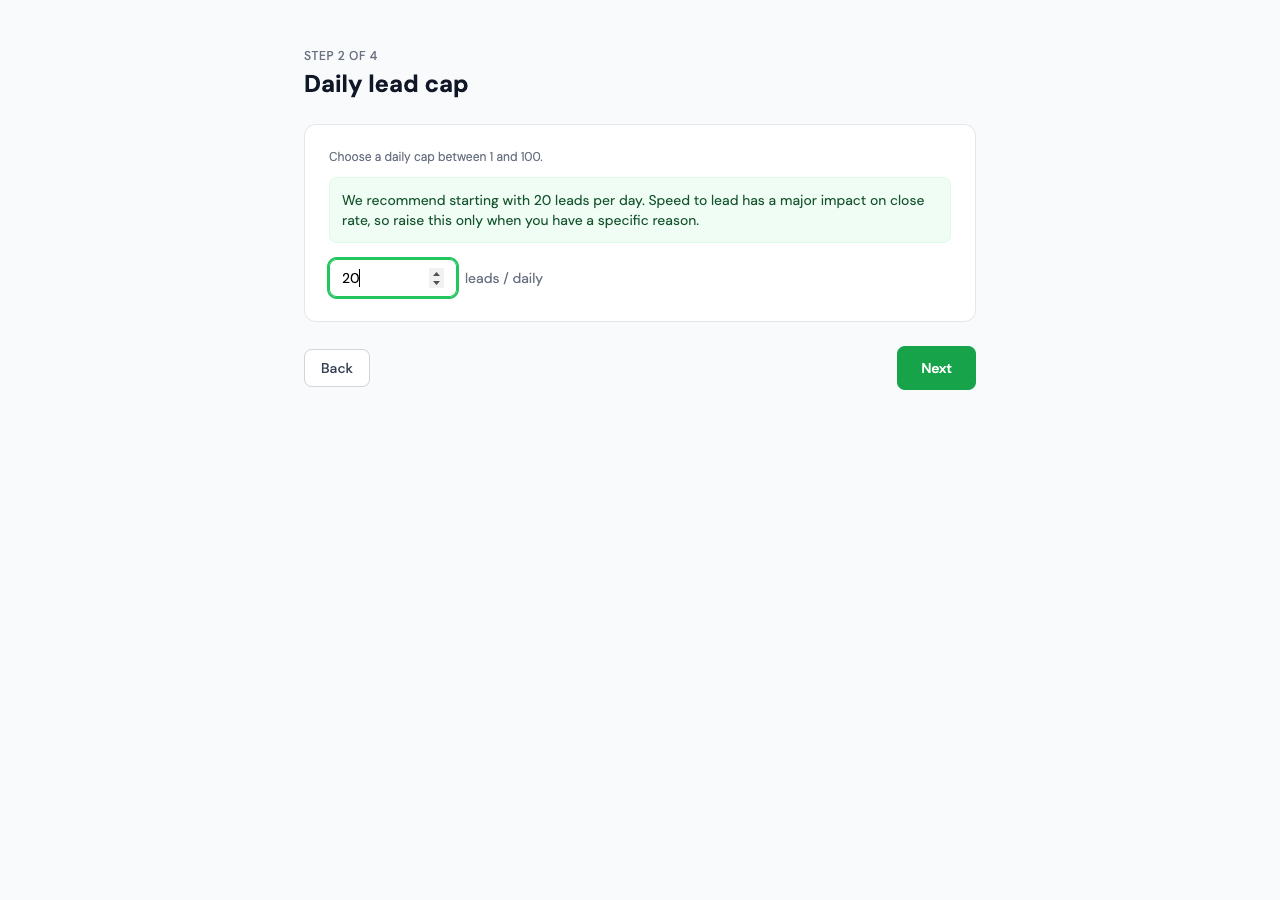
Watch a buyer choose states, set a daily cap and pick delivery in a real setup flow.
You define the setup
You attach the supported steps to the product’s wizard.
The buyer supplies the answers
A setup link opens the steps for the product the buyer bought.
Your team finishes the setup
API delivery still needs integration work. Funding, contract state and any pending call setup still apply.
Read the video transcript
- 0–12 seconds: A fictional buyer workspace shows the available lead products. This demonstration does not place an order or charge a card.
- 12–26 seconds: The buyer opens a prepared setup flow and selects the states where they want to buy leads.
- 26–38 seconds: The daily-cap step collects the buyer’s volume limit.
- 38–50 seconds: The buyer selects delivery. An API webhook choice needs the operator to set up the integration.
- 50–60 seconds: The buyer reviews the terms. The recording stops before activation or notifications. Operator integration work and final checks still apply.
The Math
Wholesale Is a Tax on Your Business
Selling through aggregators costs you twice. They take a cut of every dollar today. They also put most of your revenue in a few accounts. That risk can lower the price when you sell the business.
10–31%
The share of every dollar that aggregators keep. MediaAlpha reports a 14% take rate. EverQuote keeps a 31% variable marketing margin.
$5–25 vs $75–100
A shared auto-insurance lead sells wholesale for $5–25. Sold to one agent only, the same lead brings $75–100.
20–35%
How much less acquirers pay for a business when one customer brings in more than about 20–30% of revenue. With five aggregator accounts, each one is that kind of risk.
39%
EverQuote’s largest customer is 39% of its revenue. Sell through aggregators and you take on their risk plus your own.
~1%
Your largest customer’s share of revenue when 1,000 buyers buy direct. That is the kind of business acquirers compete to buy.
+1 bidder
More buyers can mean more bids. That gives you more ways to sell each lead.
A business with $10M in EBITDA, a measure of earnings, may be valued at 6 times that amount: $60M. A 20–35% discount cuts its value by $12–21M.
Sources: MediaAlpha and EverQuote FY2024 SEC filings; FOCUS Investment Banking (2025); industry pricing data; Bulow & Klemperer, American Economic Review (1996).
The Real Blocker
Manage More Buyers
With Less Manual Work
Selling direct can pay more. But managing hundreds of small buyers used to mean manual work for every one of them.
Onboarding
Back-and-forth spec emails, field-mapping calls, and an IT ticket for every buyer.
Billing
Invoices, collections, and prepay balances tracked in spreadsheets that fall out of date.
Delivery
Every buyer wants a different CRM, webhook, or sheet. Each one needs its own custom integration.
Management
Caps, pauses, refunds, and disputes take more work as your buyer list grows.
That workload kept direct networks small. Lead Router handles it for you.
Self-Serve Commerce
A Storefront for Your Leads
Buyers shop, pay, and reorder the way they would in any online store.
Lead Packages (SKUs)
One-time packs or recurring subscriptions. Buyers pick a package and a volume, then check out.
Stripe Checkout
Buyers keep a card on file and are charged automatically. You skip invoices and collections calls.
Coupons & Referrals
Discount codes and referral programs help your current buyers bring in new ones.
Prepaid Inventory (FIFO)
Prepaid lead balances are tracked for you, oldest purchase used first. Buyers can always see what is left.
Self-Serve Pause & Resume
Buyers pause and resume their own subscriptions without a support ticket or a call.
Receipts & Billing History
Buyers get automatic receipts and a full billing history in their portal. You do far less manual bookkeeping.
Buyers get a simple way to buy. Your team spends less time chasing payments.
Self-Configuration
Buyers Onboard Themselves
A setup wizard you design collects the buyer’s choices after checkout. Your team finishes any webhook integration and call setup before leads or calls can flow.
Pick targeting
Choose the states to buy leads in.
Set caps
Set a daily lead cap within the range you offer.
Connect delivery
Pick a delivery option. API webhook setup goes to your team.
Answer and accept
Answer your custom questions and accept your terms.
Complete setup
Your team finishes any pending integration or call setup, then checks that the buyer can receive traffic.
Buyers can answer setup questions on their own. Your team finishes any required API or call setup.
See a network in action
A mortgage call network, built on Lead Router
KeyRing Calls is a made-up network that sells live borrower calls to mortgage brokers. Its sales page asks one question — buy now, or talk to sales — and a call waterfall sells every call behind it.
- Buy onlineBrokers buy a call pack and go live without a sales call.
- Call nowA tracked number rings your sales team and names the ad behind it.
- Book a timeA Google Calendar booking page for buyers who want to talk later.
The Engine Underneath
Lead Routing
Built for Your Buyer Network
The storefront is the front door. Behind it, every lead runs through the same engine that powers ping-post networks. You also get built-in call tracking and call routing in the same platform.
Ping/Post Auctions
Native ping-post with live buyer bids returned in the same request. Post the full lead to finish the sale.
Waterfall + DQ Fallback
Try buyers in order. If they all reject a lead, the offer can send it to a backup buyer through a DQ (disqualified) contract.
Exclusive / Multisell / Hybrid
Sell each lead to one buyer, several buyers, or up to the buyer limit you set with Hybrid.
Atomic Caps
Two leads arriving at the same moment cannot both slip past a daily cap. See cap enforcement.
Fuzzy Deduplication
Buyer-level dedup with fuzzy and household matching. It helps stop a buyer from paying twice for the same person.
Dynamic Pricing & Margin
Price by buyer, contract, or rule. Track cost-per-lead and cost-per-action margins separately.
Parallel Contract Evaluation
When a lead arrives, the engine checks active contracts at the same time.
Quality Scoring & AI Analysis
Rule-based quality scores feed into routing. Separate AI analysis and anomaly alerts help your team look into changes in performance.
The AI Engine
And AI Helps Run the Engine
AI can help with buyer setup, lead review, reports, and spotting problems. Your team controls the network and reviews changes.
AI-Powered Setup
Share a buyer posting spec. The AI helps read it, map fields, and prepare the delivery setup. Review the result and test the buyer connection before sending leads.
Less time copying fields from a posting spec.
A new insurance buyer sends you their API docs. The AI reads the fields from the URL and prepares a test delivery for you to review, instead of you setting up 20+ fields by hand.
Conversational Analytics
Ask questions in plain English. "Show me revenue by buyer last week." "Which partners have declining acceptance rates?" "What's my margin on solar leads in California?"
Team members get quick answers without writing SQL or building reports.
Your account manager asks the AI "why did acceptance drop for Buyer X?" and gets a breakdown: 3 filter mismatches, 1 expired cap, and a balance issue. One-click fixes included.
Predictive Campaign Optimization
Review suggestions based on margins, prices, caps, and how leads are spread across buyers. Choose which changes to apply.
Find contracts and caps that need review.
The AI notices a round-robin solar campaign that would generate more revenue if switched to price-based distribution, and shows the math.
Intelligent Lead Scoring
AI can help your team review lead quality. Separate Quality Score models apply the rules your team writes.
Use an AI score to help your team review lead quality. Your published quality models and routing rules control delivery.
Your team can set a minimum Quality Score on a buyer contract. The published model and routing rules decide which scored leads qualify.
Anomaly Detection & Alerts
Scheduled scans watch for quality drops, fraud patterns, delivery failures, and shrinking margins. Alerts include a likely root cause.
Flags issues for your team to review.
A partner starts sending leads with invalid phone numbers at several times their normal rate. The scan flags it within 15 minutes and notifies your ops team.
Autonomous Bid Management
Planned: AI could suggest or adjust bids based on lead quality and buyer demand. Autonomous bid management is not live.
Planned tools to reduce manual bid work.
Medicare open enrollment starts. Demand spikes. The AI would raise prices for high-intent leads where 5 buyers are competing, and hold pricing where only 1 buyer matches.
Import this buyer's posting spec and set up delivery
https://buyerportal.example.com/specs/acme-insurance
Done. I configured the delivery endpoint for Acme Insurance:
Saved 45 minutes of manual configuration.
Now show me which campaigns are underperforming this week
Found 3 campaigns below their 7-day average:
Recommendation: Solar CA has 2 buyer contracts with expired caps. Shall I reset them?
See it route a live lead.
See a 15-minute demo with no commitment. Watch how the AI assistant helps set up a buyer.
Request a DemoUnified People Hub
See a person’s leads and calls in one place.
Lead Router links leads and calls to one person. Your team can review related requests, such as auto insurance in January and home insurance in March.
See it in action →

Complete Lead Lifecycle
Trace every decision, delivery and dollar.
Open any lead to see what happened: which contracts matched, why others were rejected, the delivery response, the money records, and the full audit trail. You stop guessing why a lead did not route.
Get started →Who Runs This
Built for the person running the operation.
Use one tool to route leads, check for duplicates, track revenue and manage buyers.
Sales Ops
Dashboard, reports, dedup rules
Agencies
Partners, revenue, payouts
Buyer Teams
Contracts, caps, delivery

Built-In Messaging
Full Email and SMS Campaigns.
In the Same Platform.
Follow up with your leads through built-in email and SMS. Each message uses the lead data in your account.
Email Campaigns
- Drag-and-drop template editor with merge tags
- Dynamic segments with rule builder (filter on any lead field)
- Automated flows triggered by lead events (submission, recorded outcome, delivery)
- A/B testing on subject lines, content, and send times
- Delivery monitoring by email provider (delivered, bounced, blocked, complaints)
- Bounces and blocks tracked separately for a clearer sender reputation picture
- Email providers: Amazon SES and SendGrid
- Contact import via CSV with field mapping
SMS Campaigns
- Built-in SMS campaign builder
- Two providers, Twilio and Bandwidth, for backup
- Automated SMS flows triggered by lead lifecycle events
- Dynamic personalization with merge tags
- Opt-out handling and suppression list management
- Delivery tracking with carrier-level reporting
- Two-way messaging support
- Store consent records for your checks under the Telephone Consumer Protection Act (TCPA)
Use your own email or SMS provider, or use delivery managed by Lead Router. Check the pricing page for sending rates.
Automated Flows & Sequences
Build multi-step follow-up sequences that start automatically from lead events. Combine email and SMS in the same flow.
Trigger
Lead submitted but not sold
Action
SMS follow-up in 30 min, email with alternative offers in 24h
Trigger
Lead sold but not converted
Action
Drip campaign: 3 emails over 14 days with buyer-specific content
Trigger
New buyer contract goes live
Action
Re-engage unsold leads that now match the new buyer's filters
Manage email and SMS with your lead and call data in the same platform.
See Messaging in ActionSecurity Foundation
AI Roadmap
From Assistant to Autonomous
Use the tools available now, review suggested changes, and see what is still planned.
AI-Assisted
- 30+ AI tools in the chat assistant
- Guided onboarding interview (6 steps)
- AI spec import from URLs
- Voice input/output
- Interactive walkthroughs
AI-Recommended
- Predictive lead scoring
- Campaign optimization suggestions
- Anomaly detection with root cause
- Natural language reporting
- Smart deduplication (fuzzy + household)
AI with team approval
- Prepare delivery-setting changes
- Review cap changes before applying them
- Ask questions about revenue
AI-Orchestrated
- Autonomous bid management
- Cross-campaign budget allocation
- Fully autonomous campaign lifecycle
- Multi-model ensemble routing decisions
- AI-generated buyer proposals
- Automated partner quality management
Market Opportunity
The lead software market. Compare your options.
$6.4B
Market Size (2026)
Lead generation software market. Expected to grow 9-14% a year to $16B+ by 2034.
Your own
Buyer network
Bring your own buyers. Your buyer list and contracts stay private to your account.
$2B+
Untapped Market
The healthcare lead market needs secure handling of sensitive data. Lead Router has encryption, tenant isolation, and audit logging built in.
When each platform started
Lead Router brings buyer setup, routing and follow-up tools into one platform.
2001
boberdoo
25 years old
Lead distribution
2014
LeadsPedia
12 years old
Leads and calls
2016
Phonexa
10 years old
Lead and call suite
2019
Lead Prosper
7 years old
Form-lead routing
2026
Lead Router
AI-Assisted
Leads, calls, messages
Compare the platforms
Start Building
Your Buyer Network.
Sell leads to your own buyers.